
EXTRA
By
Leonard Zwelling
I have led a very privileged life in one specific sense. I have enjoyed many moments of being next to greatness. What I mean is that have worked with, known well, or met individuals who left indelible marks on the world and by being themselves have left indelible marks on me and encouraged me to be a better me. I knew when I was in their presence that I could never emulate their super human abilities, but they were inspirations nonetheless.
I think the first group of great people I encountered was during the time I ran the Major Attractions Committee at Duke as an undergraduate. This committee put on the big rock concerts in that building where the Blue Devils play basketball, Cameron Indoor Stadium. It only holds about 8500 people at maximum so it was a small venue for many of these great artists who played the Hollywood Bowl and even larger arenas.
I ran concerts for Simon and Garfunkel, Aretha Franklin, Marvin Gaye, The Rascals, and Janis Joplin. I spoke with them all. Those of you under 60 may not know the music that these people made, but I assure you it came from a place with which I have no familiarity. They were and are all geniuses. Their music is still played 60 years after it was recorded and, in some cases, long after their deaths. To have met them in unguarded moments whether it was bringing Janis a bottle of Southern Comfort or taking two of the The Rascals to a Duke football game, it was time spent next to greatness.
There were many famous doctors on the Duke Medical School faculty during my six years of medical school and residency. In my training many of them changed the course of my life with their greatness.
The first was the late Bruce W. Dixon who was my chief resident when I was a second-year medical student. Bruce knew more medicine than anyone I had ever met before or since. He was encyclopedic and pushed me to match him, which I never could. After running to the library and doing my research and running back to Bruce to rattle off the sixteen causes of Pelger-Huet anamoly in white cells which I had just seen in a Lumbee Indian in the Hematology Clinic (this is an abnormally low number of lobes in some the lobulated white cell nuclei with no clinical ramifications), he asked, “sixteen, is that all? What else?” He got the best out of me just by being himself and being my mentor and my friend.
So did my first intern that year, Charles Scoggin. He inspired me differently. He was so dedicated to our patients and to integrating his knowledge, effort, and empathy to the care of these mostly poor Black patients that his stellar example of bedside manner has never left me to this day although I was never as good as Charlie.
Harold Silberman was the first man I ever knew who was a true oncologist. He brought unbridled enthusiasm to every patient. He thought he could cure any cancer, or at least made me believe it was possible. Without Hal, I would never have been an oncologist and never have applied to the Medicine Branch of the NCI for fellowship where my career truly began.
Wendell Rosse was one of the most brilliant men I have ever met. He was a red cell hematologist who was the man who inspired me to make hematology my first third-year clinical rotation. Wendell and Hal eliminated all other sub-specialties under my consideration in 1971. To this day I believe looking at the patient’s blood under a microscope is the most important diagnostic test available to any internist and internists should not need a hematology consult to interpret a blood smear. Drs. Rosse and Silberman made sure I could read a bone marrow aspirate slide as well if I was to pass Hematology.
Finally, I had no idea during my first clinical rotation on Medicine, that James B. Wyngaarden, the Chief of Medicine, was molding me into a physician-scientist. But everyone one around me at Duke, who he hired, was such a person and they were all among the smartest people I had ever met. How could I help but want to be like them? Many years later, when Dr. Wyngaarden headed the NIH and had dinner at our house he said, “that was always the plan.” His plan for me, and for all of my fellow residents, worked on many of us because of Jim Wyngaarden’s great vision.
At the NIH during my fellowship, Marc Lippman, one of the foremost breast cancer doctors in the world, started as my attending physician, then he was my tennis and running partner spurring me to complete a marathon, and then he was my lifelong friend. He was and is brilliant in every way even as he never was able to transfer his love of opera to me or me my love of Duke basketball to him.
When we got to MD Anderson, I also met greatness every day. All I had to do was walk down the hall. These doctors were simply the most knowledgeable and experienced oncologists in the world.
The greatest of the great was J Freireich who alone invented combination chemotherapy and the blood cell separator that still saves the lives of patients needing platelet transfusions every day. That would be enough in a lifetime, but the number of people he trained who went on to stellar careers in oncology may be his greatest contribution. He was always bigger than life and never without an opinion. He simply was a walking, talking inspiration.
The most insightful cancer biologist I ever met was Isaiah J. Fidler, known as Josh. Josh could see where no one else could. His intuitive grasp of cancer’s behavior in a living sentient being (mouse or man) was both instinctive and usually correct. He was also the funniest scientist I ever met. His wife, Margaret Kripke, was my boss for many years, but people forget how much she contributed to the Fidler-Kripke collaboration that unearthed the heterogeneous nature of cancers and the non-random nature of metastasis.
All of these people contributed to my life. Each of them was great in his or her own way. Standing near them, knowing them, interacting with them, befriending them made my life richer every time I was with them.
However, today (October 5) is the most special of days for the great I have known. Today, in my email feed early this morning was an announcement of the 2026 Nobel Prizes in Physiology or Medicine. When I read that Karl Deisseroth had won the Nobel Prize, I smiled broadly. I had been predicting this for many years.
Many years ago, Karl’s father Al was the Chief of Hematology at Anderson. We were friends and Al asked if his son could work in my lab over the summer. I said sure.
The next morning a shy, soft-spoken Sylvester Stallone sound alike introduced himself and asked if he could to go to work. I gave Karl a few of my papers and said to read them and we’d talk tomorrow.
The next morning he told me exactly what I had published, understanding the nature of the three-dimensional structure of DNA and how the enzyme we studied changed that structure. These were not easy concepts at all. Most people who came into the lab never real got them. Karl had overnight. I think he was probably home from Harvard College then.
Over the summer he exhibited amazing insight, calm thinking, scientific aptitude, and proficient experimental abilities at the bench. By the end of his time in my lab, I knew I had brushed against greatness in the making. He was probably in his early twenties then. It was like seeing Michael Jackson when he was still with the Jackson 5. There was so much more to come.
Since then, I followed Karl’s career getting his MD and PhD at Stanford and inventing the use of optogenetics in living creatures. Using the very basic discoveries and cooperation of his co-Nobel laurates, he was able to clone light-responsive opsin genes into the brains of mice, stimulate the animals with light, and cause the mice to behave in a specific, pre-determined way based on where he put the light-responsive protein’s gene. He had tapped directly into an anatomic pathway that could activate a predicted behavioral pathway. In essence, he had bridged the brain-mind continuum. He is on the verge of determining what makes you uniquely you and using it to beneficially affect aberrant behaviors like depression and other psychoses. It is not out of the question that this technology could benefit people with Parkinson’s Disease and maybe even Alzheimer’s. It is being tested now to reverse blindness in patients with retinitis pigmentosum.
I have reached out to Karl and his brilliant wife Michelle Monje, herself a MacArthur Award winner by email. Talk about a power couple! I hope they will get to my email before the trip to Sweden.
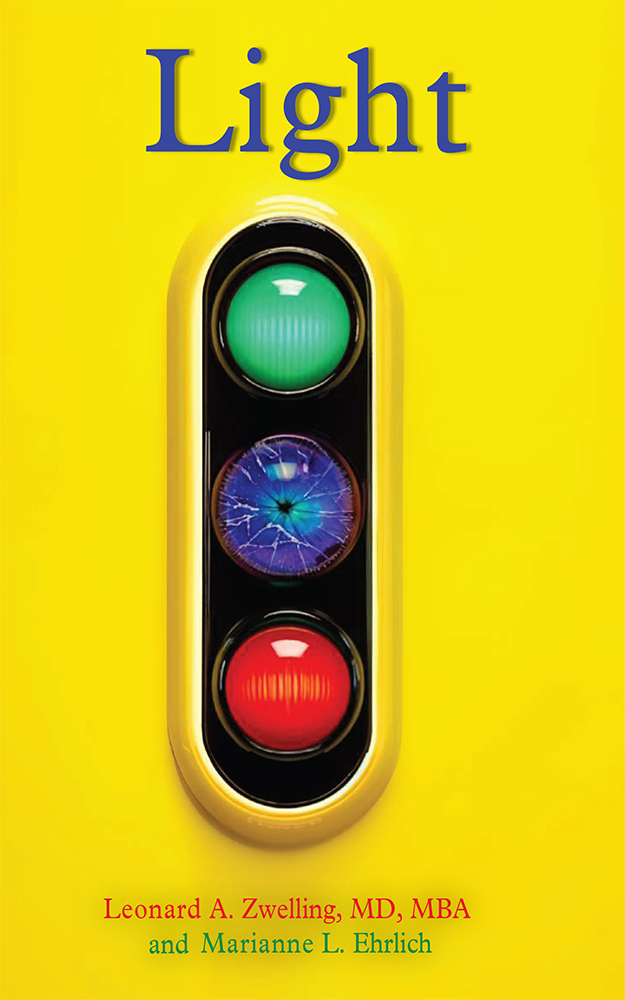
Finally, it was Karl’s work (not what he did in my lab by any means) that inspired me to write my latest novel Light. I just took the work to its logical, fictional conclusion—for good and bad. Of course, I added a little violence and sex, because I do want to sell some books.
This was a really special day. I have met a few other Nobel Laureates, but I never imagined that one would have worked in my lab. Karl did.
Quite simply, Karl is the smartest human being I have ever met, and, as you have read above, I have been blessed to meet quite a few great people in my life.
My only feeling is gratitude to all of the people I named above. You have enriched my life.
As I was finishing this blog up for a special post on a Tuesday, a blog reader sent me this superb explanation of the science behind the Nobel Prize that Karl Deisseroth shared. This was a true team effort and shows you the absolute best of humanity.
https://www.nobelprize.org/uploads/2026/10/popular-medicineprize2026.pdf
In a world where so many undeserving, small, not very intelligent or accomplished people lead our important companies, get elected to public office, and lead some of our major academic institutions, today was a day when a truly great and accomplished human being got exactly what he deserved in the best of ways.
This story touched me personally and really touched my heart.

4 thoughts on “He’s The Smartest Person I Ever Met And The Inspiration For My Novel Light: My Lifetime Next To Greatness”
Thank you Leonard. CS
Len, you wrote a beautiful and moving article of appreciation for those who have made you a great doctor and a compassionate human being. Thanks for your sensitivity.
Jan Brahms
Thanks Jan. I walked on the shoulders of giants
You were very important to me at a very critical time. I thank you, Sundance!